Techniques
Lacto-Fermentation, A Practical Guide
Jul 16, 2025
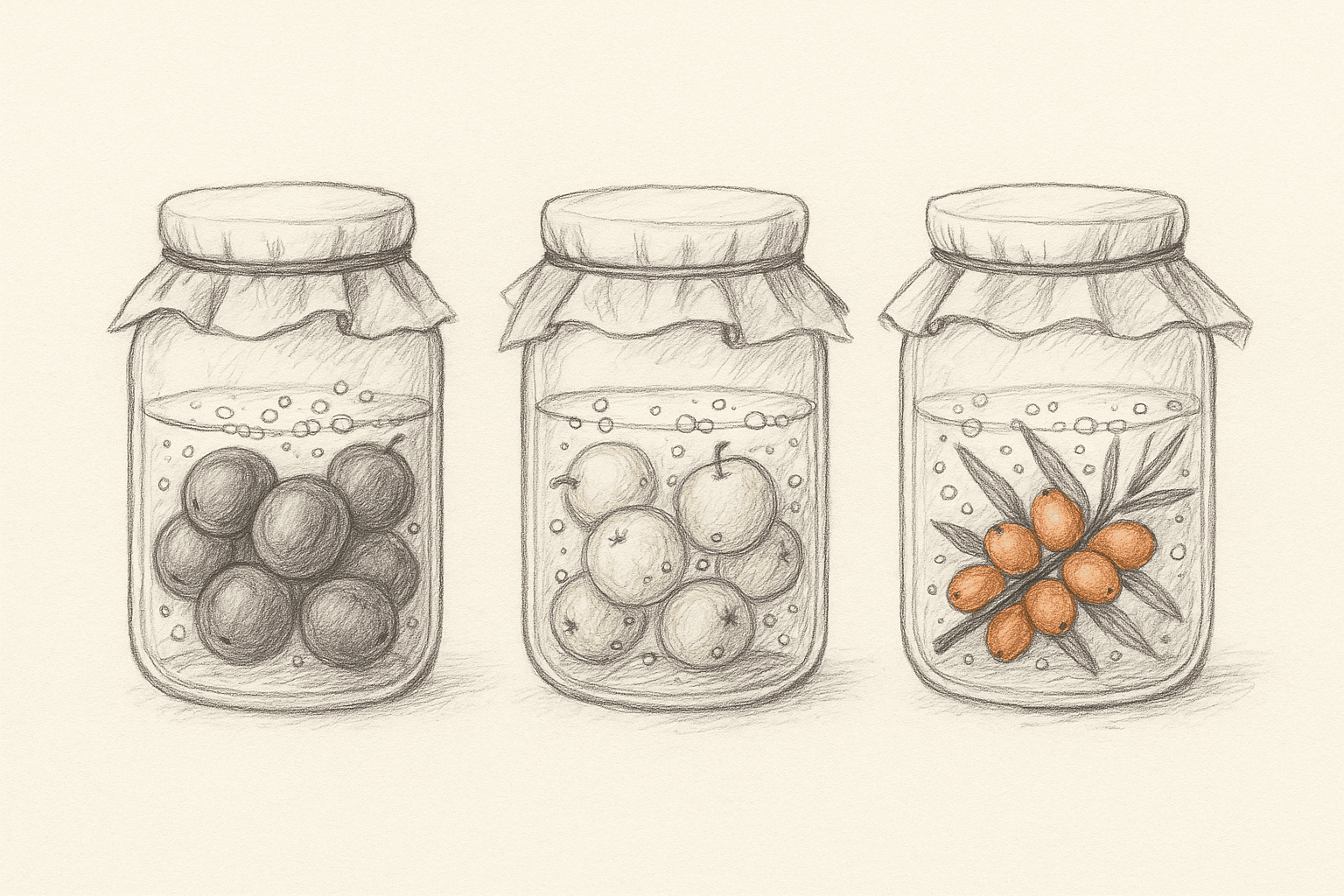
Lacto-fermentation is controlled spoilage.
Bacteria convert sugar into lactic acid.
That acid preserves and changes flavor.
Done right, it adds depth and structure.
Done wrong, you waste product.
What you need
Vegetables or fruit (firm, fresh)
Salt (non-iodized)
A container
Time
Ingredients
Use ingredients that hold structure:
Cabbage
Beetroot
Celeriac
Pumpkin
Unripe berries
Avoid soft leaves. They break down.
Work in season. Better raw material = better result.
Salt
Use 2% salt by weight
Example:
1000 g vegetables → 20 g salt
Dry salt for juicy ingredients
Brine for firm ones
Salt controls the process. Be precise.
Preparation
Cut evenly
Do not wash aggressively
Keep natural bacteria on the surface
Remove damaged parts
Fermentation
Pack tightly
Keep everything submerged
No air exposure
Hold at room temperature (20–24°C)
Time
Start tasting after 2–3 days
Stop when:
Acid is present
Ingredient still has structure
Too early → raw
Too late → flat and overly sour
Storage
Move to fridge when ready
Fermentation slows, but continues
Use within a controlled window
How to use it
As acid in a dish
Not garnish
Not decoration
Use it to balance fat, sweetness, or richness
The point
This is not about jars.
It’s about control.
If you control salt, time, and air
You control the result